
What is SEO in Digital Marketing is the process of optimizing your website to improve search engine rankings and attract organic traffic. This complete beginner’s guide explains how SEO in Digital Marketing works, including keywords, on-page SEO, and strategies to grow your online visibility effectively.
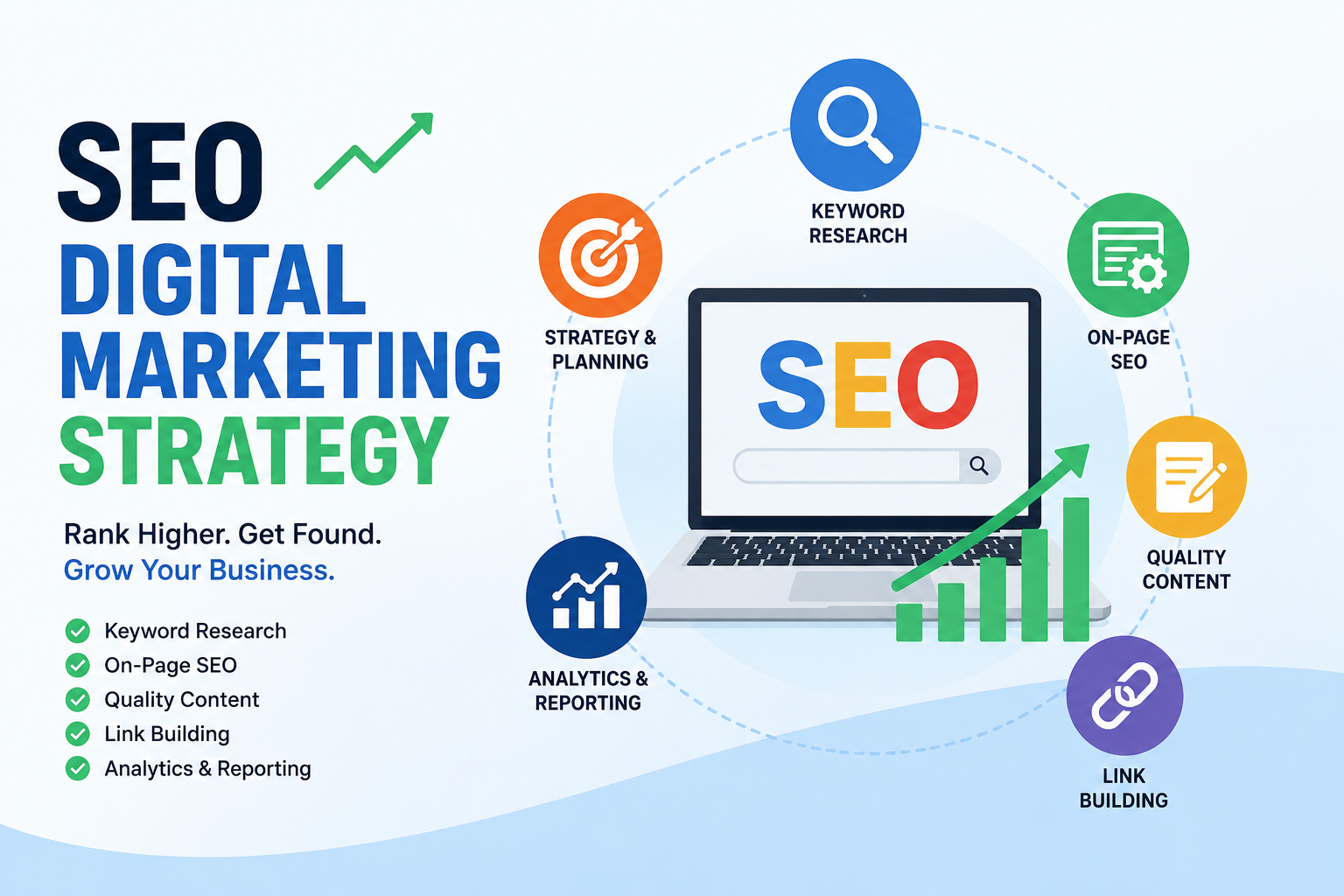
SEO: The cornerstone of successful digital marketing strategies
Within the endless world of billions of competing websites, SEO has emerged as the only viable weapon for companies who want to cut through the crowd and connect with their target audience. However, what exactly does SEO mean in digital marketing, and why is it so incredibly important to the success of any company in today’s digital world?
The comprehensive guide that follows seeks to demystify the concept of search engine optimization, give you an insight into SEO’s significance as a subset of digital marketing, and teach you everything there is to know about using it effectively in business. This tutorial caters to novices as well as intermediate marketers.
Table of Contents
- Understanding SEO in Digital Marketing
- Why SEO Matters for Digital Marketing
- Types of SEO in Digital Marketing
- Core Components of SEO
- SEO vs Other Digital Marketing Channels
- Step-by-Step SEO Tutorial
- Measuring SEO Success
- Common SEO Mistakes
- Future of SEO
- Frequently Asked Questions
Understanding SEO in Digital Marketing
Search Engine Optimization (SEO) is the strategic practice of optimizing your online content and website to improve visibility in organic (non-paid) search engine results. In the digital marketing ecosystem, SEO serves as the foundation that makes all other marketing efforts more effective.
Think of digital marketing as a house—SEO is the foundation upon which everything else is built. Without a solid SEO foundation, your content marketing, social media efforts, and even paid advertising campaigns won’t achieve their full potential. When someone searches for products, services, or information related to your business, SEO determines whether they find you or your competitors.
The Evolution of SEO in Digital Marketing
SEO has changed immensely from its inception to the present day. In the 1990s, ranking high meant stuffing keywords into your content and buying as many backlinks as possible. Today, search engines like Google use sophisticated artificial intelligence and machine learning algorithms that evaluate hundreds of ranking factors.
Modern SEO prioritizes user experience, content quality, and genuine value delivery. Google processes over 8.5 billion searches daily, and its algorithms have become remarkably adept at understanding user intent, context, and content quality. This evolution means that effective SEO now requires a holistic approach that aligns with overall digital marketing strategy.
SEO’s Role in the Digital Marketing Mix
Digital marketing encompasses various channels: content marketing, social media marketing, email marketing, pay-per-click advertising, affiliate marketing, and more. SEO doesn’t exist in isolation—it integrates with and amplifies every other channel.
When you create valuable content optimized for search engines, it simultaneously:
- Drives organic traffic through search results
- Provides shareable content for social media campaigns
- Offers valuable email newsletter material
- Reduces dependency on paid advertising
- Builds brand authority and credibility
- Creates assets that generate returns for years
According to recent studies, 53% of all website traffic comes from organic search, making SEO the single largest traffic source for most websites. Compare this to social media’s 5% and paid search’s 15%, and SEO’s importance becomes crystal clear.
Why SEO Matters for Digital Marketing
Understanding why SEO deserves significant attention and resources in your digital marketing strategy requires examining both the business benefits and consumer behavior patterns that make it indispensable.
Cost-Effectiveness and Long-Term ROI
Unlike paid advertising where traffic stops the moment you stop paying, SEO builds compound value over time. A well-optimized piece of content can generate traffic for months or even years after publication, making SEO one of the highest ROI marketing channels available.
Consider the economics: a single blog post might cost $500 to create and optimize. If that post ranks on page one of Google for a relevant keyword with 10,000 monthly searches and you capture just 5% of that traffic, you’re receiving 500 visitors monthly. Over a year, that’s 6,000 visitors from a one-time $500 investment—far more cost-effective than paying per click.
Discover more about SEO return on investment and SEO budgeting to know the financial implications.
Trust and Credibility Building
Organic search results have a higher level of consumer trust than paid ads. 75% of users never scroll past the first page of search results, and those top-ranking positions signal authority, relevance, and trustworthiness to potential customers.
When your business consistently appears in organic search results for relevant queries, you’re building brand recognition and establishing yourself as an industry authority. This psychological advantage translates to higher conversion rates—visitors from organic search typically convert better than traffic from other sources.
Competitive Advantage
Your competitors are investing in SEO. If you’re not doing this, you’re basically giving away your customers to them. In most industries, the businesses dominating search results are capturing the lion’s share of new customer acquisition.
70% of marketers actively invest in SEO, and that percentage continues growing. Early and consistent SEO investment positions your business to capture market share before competition intensifies further.
Alignment with Consumer Behavior
Today’s consumer is highly researched before buying anything. 81% of retail shoppers conduct online research before buying, and this research journey almost always begins with a search engine.
By optimizing for search, you’re ensuring your business appears at every stage of the customer journey—from initial awareness to final decision-making. This visibility throughout the buying process significantly increases conversion probability.
Types of SEO in Digital Marketing
SEO isn’t monolithic—it encompasses several distinct practices that work together to improve your search visibility. Understanding these different types helps you develop a comprehensive strategy.
1. On-Page SEO
On-page SEO refers to the process of ranking up your own web pages. This is where you can exert the most control, and where newbies should concentrate their efforts initially.
Key On-Page Elements:
Content Optimization: Developing high-quality, extensive content that covers user intent and provides valuable information about the topic.
Title Tag Optimization: Developing an attractive and informative title tag for pages to make sure that people click through the page and understand its purpose.
Meta Description Improvement: Working on the meta description to inform the users what they will find on the page while including relevant keywords that could improve click-through rate.
Header Structure: Creating an appropriate header structure that is used to organize content on a page and helps users understand its hierarchy.
URL Optimization: Creating an understandable URL for pages that could help users quickly understand the page content and its purpose.
Internal Linking: Building internal links between different pages on the website that will distribute page authority throughout the website.
Image Optimization: Optimizing images by compressing them, choosing a good image name, and adding alternative text.
Content-Length and Depth: On average, longer and more comprehensive content can be ranked higher because of its quality and value to users.
Learn more about on-page SEO checklist and internal linking strategies.
2. Off-Page SEO
Off-Page SEO involves actions that you carry out beyond your website and influence rankings. Although you do not have as much direct control over off-page SEO, it plays an important role in determining how search engines view the authority of your website.
Back-link Creation: These refer to “votes of confidence” that other websites offer you. Not all backlinks are created equal, and some carry more weight than others.
Brand Mentions: Unlinked brand mentions on the internet also improve your site’s authority. The more often your brand is mentioned, the more credible you become in the eyes of search engines.
Social Media Engagement: While social media shares do not affect your rankings, they help in gaining more exposure for your content and may lead to backlinks and mentions.
Guest Blogging: Guest blogging involves submitting high-quality content to industry publications, which can generate backlinks, reach new audiences, and establish you as an expert in the field.
Influencer Marketing: By working with industry influencers, you can increase the reach of your content and generate backlinks and social media mentions.
Online Reviews: Online reviews of your company on platforms such as Google My Business, Yelp, and industry-specific review sites impact both local SEO and general SEO.
Learn advanced strategies in our link building guide
3. Technical SEO
Technical SEO allows search engines to effectively crawl, index, and comprehend your website. Although technical SEO may not be as obvious as content creation, it acts as the necessary underpinning that makes all the others possible.
Optimizing Site Speed: Fast-loading pages give a great user experience and rank higher. Even one second of delay can make a big difference.
Mobile-Friendly Design: In a mobile-first indexing strategy, Google prioritizes mobile sites. Making your site responsive and mobile-friendly becomes imperative.
Website Architecture: Logical site structure with clear navigation helps both users and search engines understand your content organization and find important pages.
XML Sitemaps: They assist search engines in discovering all of your web pages and are especially important for large or complicated sites.
Robots.txt Setup: Through this, you direct search engines regarding which pages should be crawled and those that shouldn’t.
Schema Markup: Structured data helps search engines make sense of your content’s context and even gives you rich snippets in searches.
HTTPS Encryption: It enhances security by protecting user data while also improving ranking. Migrating to HTTPS is now necessary for all websites.
Canonical Tags: Canonicalization resolves duplication issues by identifying the primary URLs in cases where the same content.
Core Web Vitals: Google’s user experience metrics measuring loading performance, interactivity, and visual stability increasingly influence rankings.
Dive deeper with our technical SEO audit guide, Core Web Vitals optimization. Google’s Search Central documentation offers authoritative technical guidance.
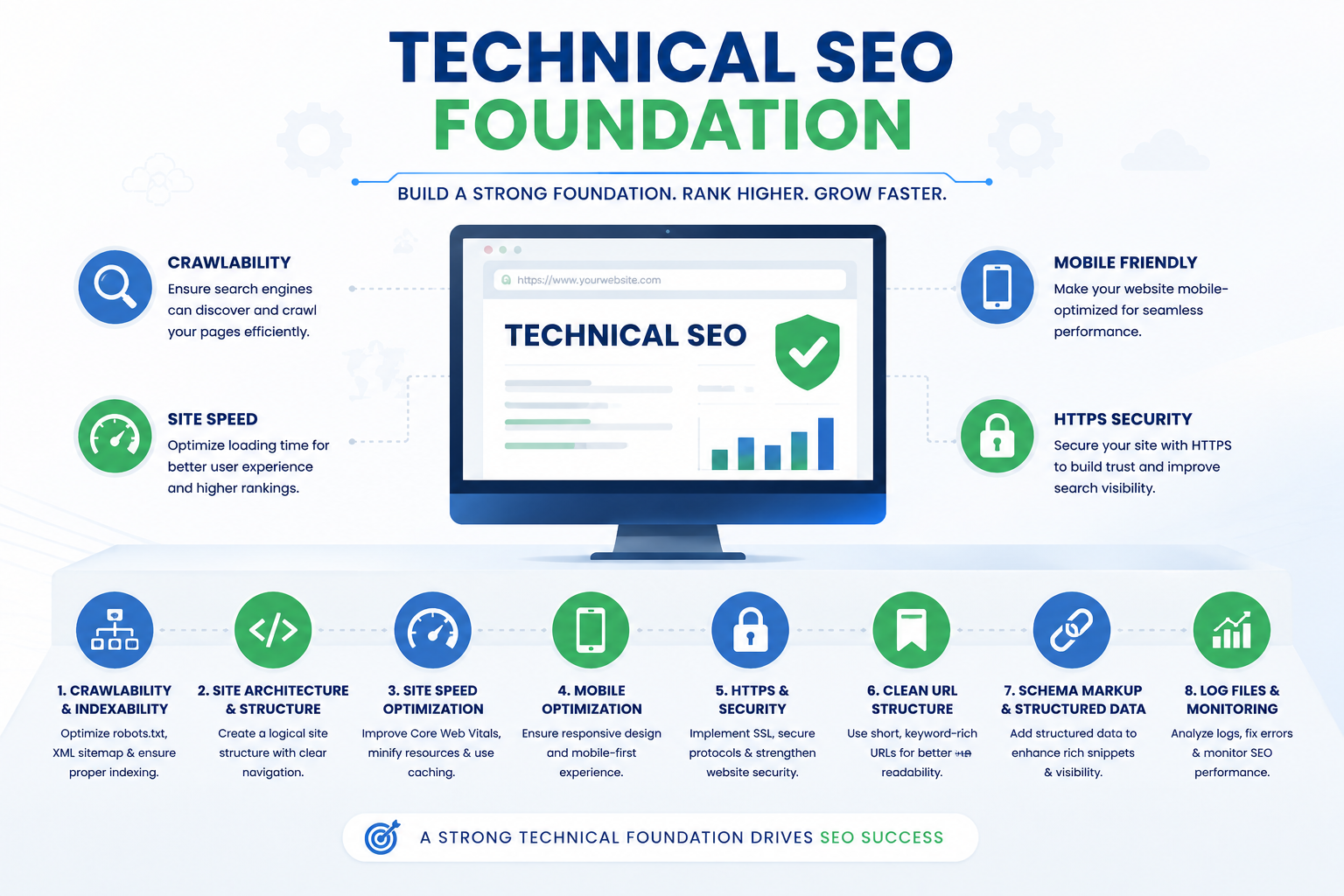
Technical SEO creates the foundation for all optimization efforts
4. Local SEO
Optimizing your online presence through Local SEO helps you draw customers through relevant local searches. For businesses serving specific geographic areas, local SEO is absolutely critical.
Google Business Profile Optimization: Claiming and optimizing your Google Business Profile (formerly Google My Business) is the foundation of local SEO success.
NAP Consistency: Ensuring your Name, Address, and Phone number appear consistently across all online platforms prevents confusion and strengthens local signals.
Local Citations: Getting listed in local directories and industry-specific platforms builds credibility and improves local search visibility.
Local Content Creation: Creating content addressing local events, news, and topics demonstrates community connection and relevance.
Review Management: Actively encouraging and responding to reviews improves visibility and conversion rates from local search results.
Location Pages: Multi-location businesses should create unique, optimized pages for each location rather than listing all locations on a single page.
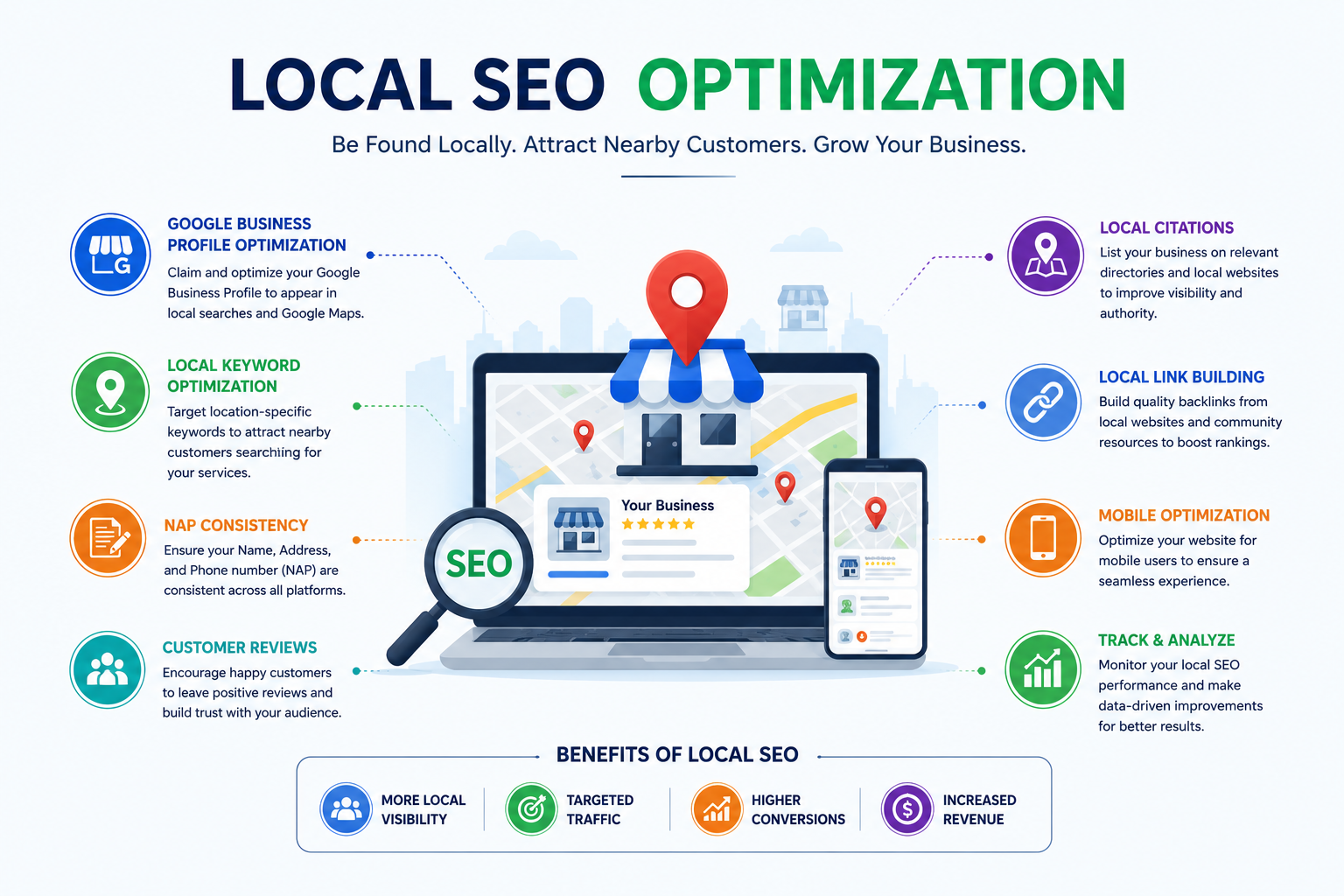
Local SEO connects businesses with nearby customers actively searching
5. E-commerce SEO
E-commerce SEO focuses on optimizing online stores to rank product and category pages in search results, driving qualified traffic ready to purchase.
Product Page Optimization: Creating unique, compelling product descriptions with relevant keywords, high-quality images, and comprehensive specifications.
Category Page Optimization: Optimizing category pages with introductory content, internal linking, and clear navigation to both users and search engines.
Faceted Navigation: Implementing filters and sorting options that enhance user experience without creating duplicate content issues.
Product Schema: Using structured data to display rich snippets showing prices, availability, and ratings directly in search results.
User-Generated Content: Leveraging customer reviews and Q&A sections to add fresh, unique content to product pages while building trust.
Core Components of SEO in Digital Marketing
Successful SEO requires mastering several fundamental components that work together to improve search visibility and drive qualified traffic.
Keyword Research and Strategy
Keywords represent the language your target audience uses when searching. Effective keyword research identifies these terms and informs your entire content strategy.
Understanding Search Intent: Keywords fall into different intent categories:
- Informational: Users seeking knowledge (“what is SEO”)
- Navigational: Users looking for specific websites or brands (“Moz SEO tools”)
- Transactional: Users ready to purchase (“buy running shoes online”)
- Commercial Investigation: Users researching before buying (“best email marketing software”)
Align your content with the appropriate intent for each target keyword. Informational keywords typically top-of-funnel content like blog posts, while transactional keywords require product or service pages.
Keyword Research Tools:
- Google Keyword Planner – Free tool providing search volume and competition data
- Ahrefs Keywords Explorer – Comprehensive keyword database with difficulty scores
- SEMrush Keyword Magic Tool – Discovers thousands of related keywords
- AnswerThePublic – Visualizes question-based keywords
- Ubersuggest – Free keyword suggestions with SEO metrics
Long-Tail Keywords: These longer, more specific phrases (typically 3+ words) often have lower search volume but higher conversion rates and less competition. “Running shoes” is highly competitive; “best trail running shoes for wide feet” is more specific and achievable.
Learn advanced techniques in our keyword research masterclass.
Content Creation and Optimization
Content is the vehicle delivering value to your audience and the medium through which search engines understand your relevance for specific queries.
Content Quality Over Quantity: Search engines increasingly prioritize content demonstrating E-E-A-T:
- Experience: First-hand experience with the topic
- Expertise: Knowledge and skill in the subject area
- Authoritativeness: Recognition as a go-to source
- Trustworthiness: Accuracy, transparency, and credibility
One exceptional, thoroughly researched piece outperforms ten mediocre articles. Focus on creating content that genuinely helps your audience, answers their questions comprehensively, and provides unique insights they can’t find elsewhere.
Content Types That Perform Well:
- Ultimate Guides: Comprehensive resources covering topics exhaustively
- How-To Tutorials: Step-by-step instructions solving specific problems
- Listicles: “Top 10” or “Best of” articles that organize information digestibly
- Case Studies: Real-world examples demonstrating your expertise
- Original Research: Data and insights unavailable elsewhere
- Comparison Articles: Helping users choose between options
- Video Content: Increasingly important as video consumption grows
Optimizing Content for SEO:
- Include target keywords naturally in titles, headers, and body text
- Write compelling meta descriptions that encourage clicks
- Use descriptive alt text for images
- Include relevant internal and external links
- Structure content with clear headers and short paragraphs
- Add multimedia elements (images, videos, infographics)
- Keep your website updated
Explore our guides on SEO content writing.
Link Building and Authority
Backlinks remain one of Google’s most important ranking factors. Quality links from authoritative sites signal that your content is valuable and trustworthy.
White-Hat Link Building Strategies:
Creating Link-Worthy Content: The foundation of sustainable link building is creating content worth linking to—original research, comprehensive guides, unique insights, and valuable resources naturally attract links.
Guest Posting: Contributing high-quality articles to reputable industry publications builds backlinks and exposes your brand to new audiences. Focus on relevance and quality over quantity.
Digital PR: Creating newsworthy content, conducting studies, or offering expert commentary positions you for mentions and links from news outlets and industry publications.
Broken Link Building: Finding broken links on relevant websites and suggesting your content as a replacement provides value while earning backlinks.
Resource Page Links: Identifying resource pages in your industry and reaching out to be included, provided your content genuinely adds value.
Relationship Building: Developing genuine relationships with industry influencers, bloggers, and journalists often leads to natural linking opportunities.
Avoid These Black-Hat Tactics:
- Buying links
- Participating in link schemes
- Using automated link building tools
- Creating low-quality content for links
- Excessive reciprocal linking
These tactics risk severe penalties that can devastate your search visibility.
User Experience and Technical Performance
Google increasingly prioritizes sites delivering excellent user experiences. Technical performance directly impacts both rankings and conversion rates.
Core Web Vitals: Google’s UX metrics include:
- Largest Contentful Paint (LCP): Measures loading performance (should occur within 2.5 seconds)
- First Input Delay (FID): Measures interactivity (should be less than 100 milliseconds)
- Cumulative Layout Shift (CLS): Measures visual stability (should be less than 0.1)
Site Speed Optimization:
- Compress and optimize images
- Minimize CSS, JavaScript, and HTML
- Leverage browser caching
- Use a Content Delivery Network (CDN)
- Choose quality hosting
- Implement lazy loading
Mobile Optimization:
- Ensure responsive design across all devices
- Maintain readable text without zooming
- Ensure adequate tap target spacing
- Optimize for slower mobile connections
Test your site with Google PageSpeed Insights, GTmetrix, and WebPageTest. Our guides on improving Core Web Vitals provide detailed optimization strategies.
SEO vs Other Digital Marketing Channels
Understanding how SEO compares to other digital marketing channels helps you allocate resources effectively and create integrated strategies.
SEO vs PPC (Pay-Per-Click Advertising)
SEO Advantages:
- Long-term value (content continues generating traffic)
- Higher trust (users prefer organic results)
- Lower ongoing costs (no per-click fees)
- Compound growth (momentum builds over time)
PPC Advantages:
- Immediate results (traffic starts instantly)
- Precise targeting (demographics, behaviors, interests)
- Predictable costs (set daily budgets)
- Testing opportunities (rapid A/B testing)
The Reality: The most effective digital marketing strategies combine both. Use PPC for immediate results while building SEO for long-term sustainability. PPC data also informs SEO keyword strategy.
SEO vs Social Media Marketing
SEO Advantages:
- Capture high-intent traffic (people actively searching)
- Sustainable traffic (not dependent on algorithm changes)
- Better conversion rates (users seeking solutions)
- Content longevity (posts don’t disappear from feeds)
Social Media Advantages:
- Direct audience engagement
- Viral potential
- Community building
- Visual storytelling opportunities
Integration Strategy: Create content optimized for search, then promote it through social media to increase reach, earn backlinks, and drive initial traffic. Social signals can indirectly support SEO through increased visibility.
SEO vs Email Marketing
SEO Advantages:
- Reaches new audiences (not limited to existing list)
- No deliverability concerns
- Passive traffic generation
- Discovery-based engagement
Email Marketing Advantages:
- Direct communication channel
- Personalization opportunities
- Higher engagement rates (among subscribers)
- Immediate delivery
Integration Strategy: Use SEO to build your email list by offering valuable content upgrades, then nurture those relationships through email campaigns. Email subscribers often become brand advocates who share your content, earning natural backlinks.
SEO vs Content Marketing
The Truth: SEO and content marketing aren’t separate channels—they’re deeply interconnected. Content marketing is the strategy of creating and distributing valuable content; SEO is how you ensure that content gets found.
Effective content marketing requires SEO to maximize reach and ROI. Conversely, SEO without quality content is impossible—you need something to optimize and rank.
Step-by-Step SEO Tutorial for Beginners
This practical tutorial walks you through implementing SEO for your website, regardless of your technical background or industry.
Step 1: Set Up Essential SEO Tools
Before diving into optimization, establish your foundation with these free tools:
Google Search Console: Monitors your site’s presence in Google search results, identifies technical issues, and shows which queries drive traffic.
- Visit Google Search Console
- Add and verify your website property
- Submit your XML sitemap
- Monitor indexing status and fix errors
Google Analytics: Tracks website traffic, user behavior, and conversion metrics.
- Set up Google Analytics 4
- Install tracking code on your website
- Define goals and conversions
- Create custom reports for SEO metrics
Additional Useful Tools:
- Bing Webmaster Tools – Monitor Bing search performance
- Google PageSpeed Insights – Analyze site speed
- Screaming Frog SEO Spider – Crawl your site for technical issues
- Yoast SEO (for WordPress) – On-page optimization guidance
Step 2: Conduct Comprehensive Keyword Research
Identify the phrases used by your target audience when they search for your products/services/information.
Process:
- Generate seed keywords: Start by listing keywords that relate directly to your business
- Expand keyword list: Use software to uncover other terms and questions related to seed keywords
- Determine search intent: Identify what people are looking for when they use a particular search phrase
- Estimate keyword difficulty: Gauge the level of competition for each keyword
- Select best keywords: Prioritize keywords that are not difficult and have decent opportunity
- Assign keywords to pages: Match keywords to relevant pages of your website
Keyword Metrics to Consider:
- Search Volume: Number of searches per month
- Keyword Difficulty: Level of competitiveness of a keyword
- Cost Per Click: Amount that advertisers pay
- Search Intent: What the user wants to achieve
- SERP Features: Featured snippets, videos, shopping results, etc.
Step 3: Perform an SEO Audit
Before making any changes that would make your SEO better, you must know what state your SEO is in.
What to Audit:
- Technical Problems: Crawl issues, broken links, redirect chains
- On-Page SEO: Title tags, meta descriptions, header organization
- Content: Low-quality content, duplicate content, out-of-date content
- Page Speed: Page loading speed, Core Web Vitals
- Mobile Optimization: Mobile-friendly design, mobile usability
- Backlink Analysis: Backlinks Quality, Toxic Backlinks, Anchor Texts
- Local SEO: NAP Consistency, Google My Business
Free Audit Tools:
- Google Search Console (technical issues)
- Google PageSpeed Insights (performance)
- Google Mobile-Friendly Test (mobile optimization)
- Screaming Frog (comprehensive crawl analysis)
Step 4: Optimize On-Page Elements
Systematically improve every page’s optimization following SEO best practices.
Page-by-Page Optimization Checklist:
Title Tag:
- Include target keyword (preferably near the beginning)
- Keep under 60 characters to avoid truncation
- Make it compelling to encourage clicks
- Ensure uniqueness across all pages
Meta Description:
- Summarize page content accurately
- Include primary and related keywords naturally
- Create curiosity or urgency to drive clicks
- Keep under 160 characters
URL Structure:
- Use descriptive, keyword-rich URLs
- Keep URLs short and readable
- Use hyphens to separate words
- Avoid parameters when possible
Header Tags:
- Use single H1 tag with primary keyword
- Structure content with H2 and H3 subheadings
- Make headers descriptive and scannable
- Include keywords naturally in headers
Content Optimization:
- Include target keyword in first 100 words
- Use variations and related terms throughout
- Write naturally for humans first
- Aim for comprehensive topic coverage
- Include relevant images and multimedia
- Add internal links to related content
- Cite authoritative external sources
Image Optimization:
- Use descriptive, keyword-rich file names
- Write detailed alt text for accessibility and SEO
- Compress images for faster loading
- Use modern formats (WebP when possible)
- Implement responsive images
Step 5: Build Your Link Profile
Beginner-Friendly Link Building Tactics:
1. Create Linkable Assets:
- Original research and data
- Comprehensive guides
- Free tools or calculators
- Unique infographics
- Industry reports
2. Guest Blogging:
- Identify relevant industry publications
- Pitch unique, valuable topic ideas
- Write exceptional content
- Include natural, contextual links
- Build ongoing relationships
3. Resource Page Links:
- Find resource pages in your niche
- Ensure your content deserves inclusion
- Reach out with personalized pitches
- Offer value before asking for links
4. Broken Link Building:
- Use tools to find broken links on relevant sites
- Identify or create the replacement content for the non-working resource.
- Reach out offering your content as a replacement
5. HARO (Help A Reporter Out):
- Respond to relevant journalist queries
- Provide expert insights and quotes
- Earn mentions and links from major publications
6. Outreach Best Practices:
- Research recipients thoroughly
- Personalize every email
- Lead with value, not requests
- Keep emails concise
- Follow up professionally
- Build genuine relationships
Step 6: Optimize Technical SEO
Make sure that search engines can effectively crawl, index, and comprehend your website.
Technical Priorities:
Site Speed:
- Test with PageSpeed Insights
- Compress and optimize images
- Enable browser caching
- Minify CSS and JavaScript
- Use a CDN for faster global delivery
Mobile Optimization:
- Implement responsive design
- Test on multiple devices
- Ensure touch targets are adequate size
- Optimize for slower mobile connections
XML Sitemap:
- Generate sitemap (most CMS do this automatically)
- Submit to Google Search Console
- Include only indexable pages
- Update regularly
Robots.txt:
- Ensure it’s not blocking important pages
- Use to guide crawlers efficiently
- Test with Google Search Console
HTTPS:
- Migrate to HTTPS if still on HTTP
- Ensure all resources load securely
- Update internal links to HTTPS versions
Structured Data:
- Implement relevant schema markup
- Test with Google’s Rich Results Test
- Monitor for errors in Search Console
Fix Crawl Errors:
- Regularly check Search Console for errors
- Fix 404 errors or implement 301 redirects
- Resolve server errors
- Address mobile usability issues
Check out our technical SEO checklist and site speed optimization guide for more information.
Step 7: Create and Optimize Content Consistently
Develop a sustainable content creation process that balances quality with consistency.
Content Planning:
- Map keywords to content topics
- Identify content gaps in your niche
- Plan content around buyer journey stages
- Create editorial calendar with realistic schedule
- Mix content types (guides, tutorials, lists, case studies)
Content Creation Process:
- Research thoroughly: Analyze top-ranking content, identify information gaps
- Outline strategically: Structure content logically with clear sections
- Write comprehensively: Cover topics thoroughly, answer related questions
- Optimize carefully: Include keywords naturally, optimize all on-page elements
- Enhance visually: Add relevant images, videos, infographics
- Edit rigorously: Check for clarity, accuracy, grammar, and readability
Content Optimization After Publishing:
- Monitor performance in Search Console
- Identify ranking opportunities (positions 11-20)
- Update and expand content on those pages
- Add new sections addressing related queries
- Refresh outdated information regularly
- Add internal links from new content to older pieces
Step 8: Monitor, Measure, and Improve
SEO requires ongoing attention and adjustment based on performance data.
Key Metrics to Track:
Traffic Metrics:
- Organic traffic volume and trends
- Traffic by landing page
- New vs. returning visitors
- Geographic traffic distribution
Ranking Metrics:
- Keyword position changes
- Search visibility score
- Featured snippet acquisition
- SERP feature presence
Engagement Metrics:
- Bounce rate
- Average session duration
- Pages per session
- Scroll depth
Conversion Metrics:
- Goal completions
- Conversion rate from organic traffic
- Assisted conversions
- Revenue from organic search
Technical Metrics:
- Core Web Vitals performance
- Page speed trends
- Crawl errors
- Indexation status
Regular SEO Activities:
- Weekly: Monitor Search Console for errors, check key rankings
- Monthly: Review traffic and conversion trends, identify optimization opportunities
- Quarterly: Conduct comprehensive audits, update major content pieces
- Annually: Review strategy, update keyword targets, assess competitive landscape
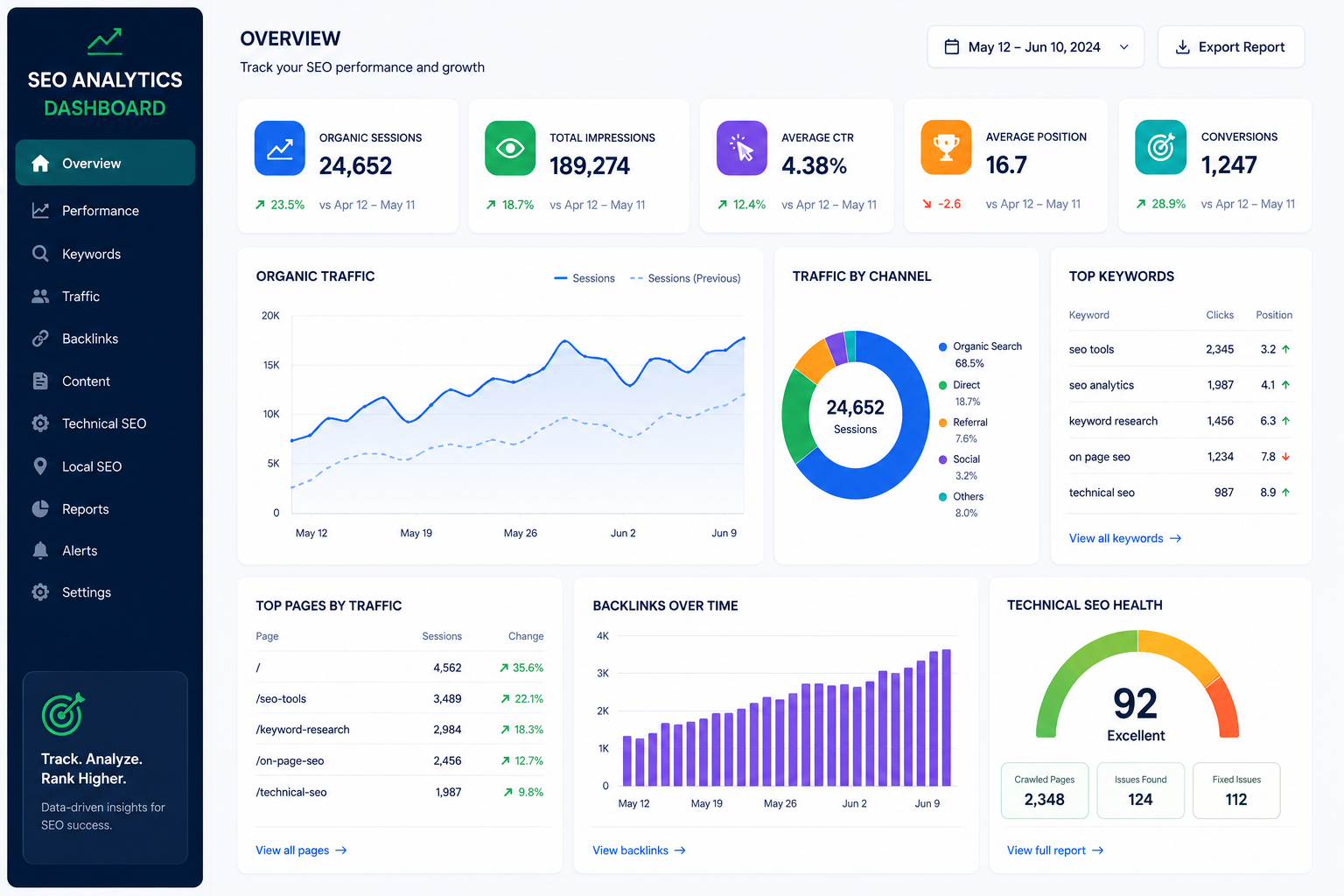
Regular monitoring helps identify opportunities and issues early
Measuring SEO Success in Digital Marketing
Understanding how to measure SEO performance within your broader digital marketing efforts ensures you’re making data-driven decisions and demonstrating ROI.
Setting SMART SEO Goals
Effective goal-setting follows the SMART framework:
- Specific: “Increase organic traffic to product pages” not “improve SEO”
- Measurable: Include concrete numbers and metrics
- Achievable: Set realistic targets based on current performance
- Relevant: Align with overall business objectives
- Time-bound: Specify deadlines and milestones
Example SMART SEO Goals:
- Achieve a 30 percent increase in organic traffic within six months.
- Rank in top 3 positions for 10 target keywords by Q4
- Improve organic conversion rate from 2% to 3% by year-end
- Earn 50 quality backlinks from relevant sites within 12 months
Attribution and Multi-Channel Analysis
SEO rarely works in isolation. Users often interact with multiple channels before converting, making attribution modeling important.
Attribution Models:
- Last Click: Credits the final touchpoint (undervalues SEO for awareness)
- First Click: Credits initial discovery (overvalues top-of-funnel SEO)
- Linear: Distributes credit equally across touchpoints
- Time Decayed: Places greater weight on recent events
- Position-Based: Places greatest weight on first and last events.
Calculating SEO ROI
Demonstrating SEO’s financial impact helps secure continued investment and resources.
Basic ROI Formula:
SEO ROI = (Revenue from Organic Search - SEO Investment) / SEO Investment × 100
Example Calculation:
- SEO Investment (annually): $50,000
- Revenue from Organic Search: $200,000
- ROI: ($200,000 – $50,000) / $50,000 × 100 = 300%
Factors to Include in Investment:
- Staff salaries/time
- Agency or consultant fees
- Tools and software subscriptions
- Content creation costs
- Technical development
Attributing Revenue:
- Set up e-commerce tracking in Analytics
- Assign values to non-e-commerce goals
- Track assisted conversions
- Consider lifetime customer value
Competitive Benchmarking
Understanding your performance relative to competitors provides context and identifies opportunities.
Competitive Analysis Areas:
- Keyword rankings comparison
- Organic traffic estimates
- Backlink profile comparison
- Content gaps and opportunities
- SERP feature capture
Tools for Competitive Analysis:
- SEMrush – Comprehensive competitive intelligence
- Ahrefs – Backlink and keyword analysis
- SpyFu – Competitor keyword research
Common SEO Mistakes to Avoid
Learning from common pitfalls helps you avoid wasted effort and potential penalties.
Mistake 1: Keyword Stuffing
The Problem: Cramming keywords unnaturally into content makes it unreadable and triggers spam filters.
The Solution: Write naturally for humans first. Include keywords where they fit contextually, but prioritize readability and user experience. Use synonyms and related terms to demonstrate topic comprehension.
Mistake 2: Ignoring Search Intent
The Problem: Targeting keywords without understanding what users actually want leads to high bounce rates and poor rankings.
The Solution: Analyze top-ranking results for your target keywords. If they’re all blog posts, don’t create a product page. Match your content format and depth to what Google shows users want.
Mistake 3: Neglecting Mobile Optimization
The Problem: With mobile-first indexing, poor mobile experiences tank rankings regardless of desktop performance.
The Solution: Implement responsive design, test thoroughly on real devices, optimize for touch interactions, and ensure fast loading on mobile connections.
Mistake 4: Duplicating Content
The Problem: Identical or substantially similar content across multiple URLs confuses search engines about which version to rank.
The Solution: Create unique content for each page, use canonical tags when duplication is unavoidable, and implement 301 redirects for duplicate pages you can eliminate.
Mistake 5: Buying Links
The Problem: Purchasing backlinks violates Google’s guidelines and risks severe penalties that can devastate your search visibility.
The Solution: Focus on earning links naturally through exceptional content, relationship building, and providing genuine value to your industry.
Mistake 6: Expecting Instant Results
The Problem: SEO takes time. New sites typically need 3-6 months to see significant results, and competitive keywords may take longer.
The Solution: Set realistic expectations, focus on consistent execution, measure progress with realistic milestones, and remember that SEO’s compound growth makes patience worthwhile.
Mistake 7: Ignoring Technical SEO
The Problem: Brilliant content can’t rank if search engines can’t properly crawl and index it.
The Solution: Regularly audit technical health, fix crawl errors promptly, optimize site speed, implement HTTPS, and ensure mobile-friendly design.
Mistake 8: Not Tracking Results
The Problem: Without measurement, you can’t identify what’s working, prove ROI, or make data-driven improvements.
The Solution: Set up comprehensive tracking from day one, establish baseline metrics, monitor key performance indicators regularly, and adjust strategy based on data.
The Future of SEO in Digital Marketing
Staying ahead of emerging trends ensures your SEO strategy remains effective as the landscape evolves.
Artificial Intelligence and Machine Learning
AI increasingly powers search algorithms, enabling better understanding of content quality, user intent, and contextual relevance. Google’s BERT, MUM, and other AI models make search more sophisticated.
Implications: Focus on comprehensive topic coverage, natural language, and genuine expertise rather than keyword manipulation. AI rewards quality and punishes shortcuts.
Voice Search and Conversational Queries
Smart speakers and voice assistants drive longer, more conversational searches. “What’s the weather?” becomes “What’s the weather like in New York this weekend?”
Optimization Strategies:
- Target question-based keywords
- Create FAQ pages and sections
- Optimize for featured snippets (often read by voice assistants)
- Use natural, conversational language
- Local SEO is important (most voice search queries are local)
Visual Search
Image-based search through Google Lens, Pinterest Lens, and similar technologies allows users to search using images rather than text.
Optimization Strategies:
- Make use of descriptive filenames for images, as well as alt tags
- Use high-quality, unique images
- Implement image schema markup
- Ensure images are indexed
- Consider visual content marketing
E-E-A-T and Content Quality
Google’s emphasis on Experience, Expertise, Authoritativeness, and Trustworthiness continues strengthening. Content demonstrating genuine knowledge and credentials ranks better.
How to Demonstrate E-E-A-T:
- Showcase author credentials and expertise
- Cite authoritative sources
- Provide original insights and research
- Build brand authority through mentions and links
- Ensure content accuracy and transparency
Core Web Vitals and User Experience
Page experience signals increasingly influence rankings. Sites providing excellent user experiences gain advantages over slower, less user-friendly competitors.
Future Considerations:
- Prioritize technical performance
- Focus on mobile experience
- Minimize intrusive interstitials
- Ensure accessibility
- Design for actual user needs
Zero-Click Searches
Featured snippets, knowledge panels, and other SERP features increasingly answer queries without requiring clicks.
Adaptation Strategies:
- Optimize for featured snippets
- Build brand authority so users seek you out
- Focus on longer-tail, complex queries requiring detailed answers
- Implement structured data for rich results
Frequently Asked Questions {#faqs}
What is SEO in digital marketing?
SEO (Search Engine Optimization) is a term used in digital marketing which entails optimizing the website or its content in order to achieve good ranking in organic searches carried out by search engines. This is one of the major strategies employed in increasing visibility during searches related to the business. Apart from SEO, there are other tools of digital marketing such as social media, email marketing, and PPC that can be utilized to create a digital footprint.
How long does it take to achieve SEO?
This is the most common question regarding SEO. The answer to this is typically 3 to 6 months depending on different factors such as industry, competition, domain authority, and effectiveness of the SEO process. It usually takes longer for new websites (6-12 months) due to low domain authority. Long tail keywords take longer compared to short tail keywords.
How much does SEO cost?
SEO costs vary dramatically based on approach and scope:
- DIY SEO: $0-500 monthly (tools and education)
- Freelance SEO: $500-2,000 monthly (varies by experience)
- Small Agency: $2,000-5,000 monthly (ongoing services)
- Enterprise Agency: $5,000-20,000+ monthly (comprehensive strategies)
ROI typically justifies the investment—effective SEO often returns 5-10x the cost through increased organic traffic and conversions. Consider SEO a long-term investment rather than an expense.
Can I perform SEO or do I need to hire someone?
Beginners can absolutely implement basic SEO themselves, especially for smaller websites. Start with free resources, tools, and tutorials to build foundational knowledge. However, hiring professionals makes sense if:
- You operate in highly competitive industries
- Your website is large or technically complex
- You lack time for consistent implementation
- You need faster results
- Your company relies greatly on organic search traffic
Many businesses start DIY, then hire experts as they grow and SEO becomes more critical to revenue.
What’s the difference between SEO and SEM?
SEO (Search Engine Optimization) is solely concerned with optimizing for organic (unpaid) search rankings. SEM (Search Engine Marketing) includes SEO and paid search advertising (PPC/Google Ads).
Key Differences:
- SEO: Organic traffic, slower process, sustainable, needs constant optimization
- PPC: Paid traffic, instant gratification, pays per click, stops getting traffic once budget runs out
The best way to achieve success is by combining both: get instant traffic via PPC while establishing SEO for sustainability.
Do social media and SEO work together?
Yes, though indirectly. Social media does not affect search rankings; however, it can help with SEO by means of:
- Increased content visibility leading to natural backlinks
- Brand awareness that generates branded searches
- Social signals indicating content quality and relevance
- Traffic that can improve engagement metrics
- Building relationships with influential people who could link to you
Integrate social media into your content distribution strategy to amplify SEO efforts.
Is SEO dead or still worth it?
SEO is very much alive and remains one of the most effective digital marketing channels. While tactics evolve with algorithm updates and technology changes, the fundamental goal—helping people find valuable content—ensures ongoing relevance. Organic search continues driving over 50% of website traffic for most businesses, making SEO essential.
The nature of SEO changes (less manipulation, more quality focus), but its importance only grows as online competition intensifies.
What are the most important ranking factors?
Google uses over 200 ranking signals, but the most influential include:
- Content quality and relevance: Comprehensive, valuable content matching search intent
- Backlink profile: Quality and quantity of links from authoritative sites
- User experience signals: Core Web Vitals, mobile-friendliness, site speed
- On-page optimization: Title tags, content structure, keyword usage
- Domain authority: Overall site trustworthiness and expertise
- Freshness: Regular content updates signal activity
- Security: HTTPS and secure connections
Focus on these high-impact factors before worrying about minor ranking signals.
How often should I update my website for SEO purposes?
Updates for Content:
- New content creation: Regularly (weekly or bi-weekly for blogs)
- Refreshing existing content: Quarterly for large pages, yearly for evergreen content
- Product/service pages: When something changes
Updates for Technical:
- Security updates: As soon as they appear
- Plugin/theme updates: Monthly (test first on staging site)
- Performance updates: Every quarter
Updates for SEO activities:
- Keyword research: Quarterly
- SEO technical audit: Quarterly
- Backlink building: Ongoing activity
- SEO performance tracking: Weekly
The regularity of actions is not crucial; what matters more is consistency – be able to maintain a certain pace.
What SEO strategy works best for small businesses?
Small business owners need to focus on the following:
- Local SEO: Optimize Google My Business listing, get local citations, and earn customer reviews
- Long-tail keywords: Target specific search queries with high intent
- Quantity over quality: Create fewer, but more valuable content pieces than numerous poor-quality blog posts
- Customer’s FAQ: Answer the most frequently asked questions in your industry
- Local partnerships: Earn backlinks from local institutions and chambers of commerce
- Reviews from customers:: Earn positive reviews of your business and its products/services
- Mobile optimization: Provide a superior user experience for mobile users
Smaller companies can outrun larger businesses by targeting niche markets and local areas.
Final Thoughts: Your SEO Journey in Digital Marketing
Search engine optimization (SEO) is one of the most powerful weapons in digital marketing for sustaining growth. It is important to note that while the technical aspects of SEO can be intimidating at first, SEO all boils down to knowing your target audience, adding value, and ensuring it is accessible.
Start off by learning the basics of keyword research, on-page optimization, and content creation. Gradually move to technical SEO and link building. It is more important to execute well consistently rather than achieving perfection right away.
Key Takeaways:
- SEO is an investment that pays off exponentially in the long term
- High-quality content that meets the needs of users is the starting point
- Technical expertise ensures that your content gets discovered
- Link building builds authority and credibility
- Continuous improvement is essential to success
- Integration with other channels of marketing increases effectiveness
As digital marketing continues to evolve, it is important to note that any organization that focuses on genuinely serving its audience will always be successful in the world of SEO.
Your Action Plan:
- Setup SEO tools (Search Console, Analytics)
- Conduct keyword research for your niche
- Audit your current website for issues and opportunities
- Create a content calendar focused on user needs
- Implement on-page optimization systematically
- Build relationships for natural link acquisition
- Monitor results and adjust based on data
Remember, every major website started from zero. With patience, persistence, and an authentic approach to value creation, your SEO endeavors will yield significant outcomes that will change the course of your business.
Take action today. Take one point from the above guide and apply it right away. Every tiny move forward gets you closer to achieving the benefits that come with SEO.